
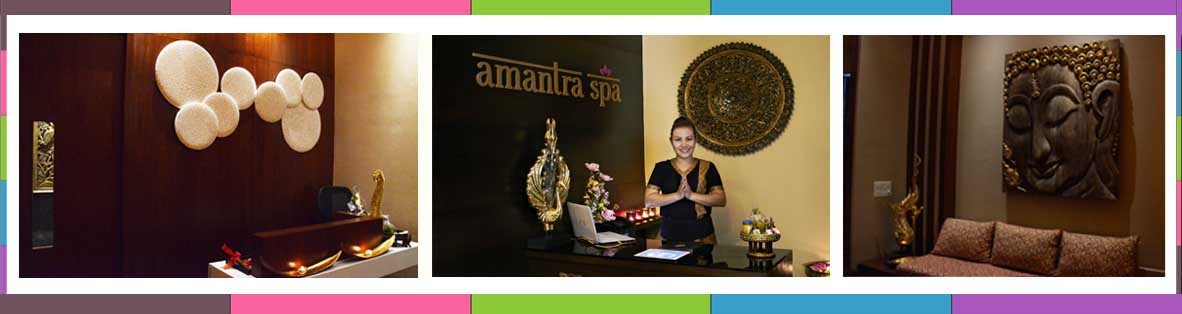

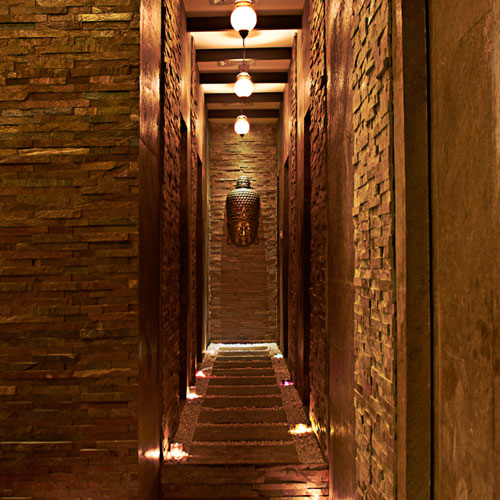
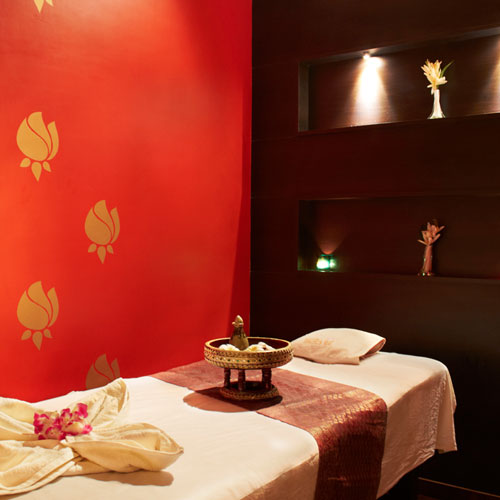
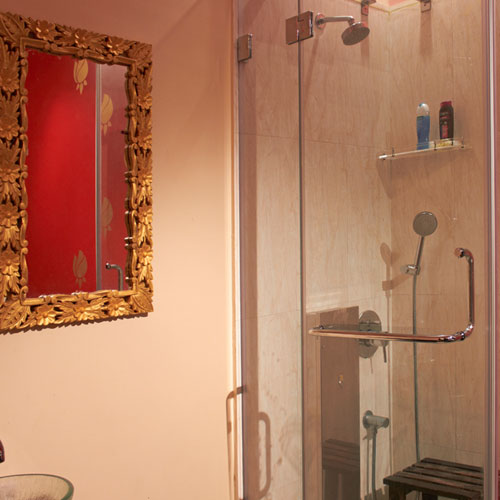
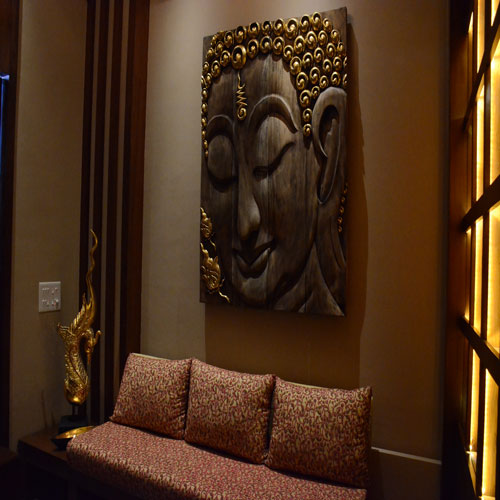
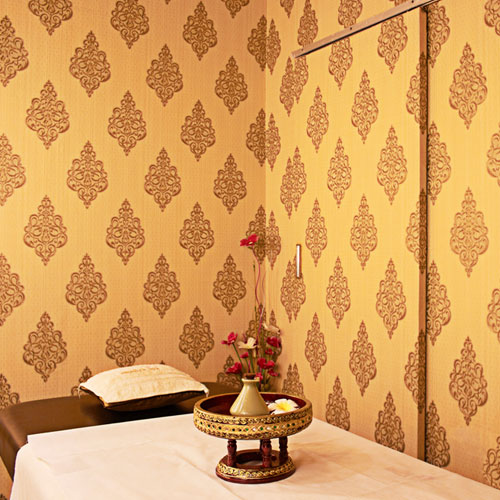
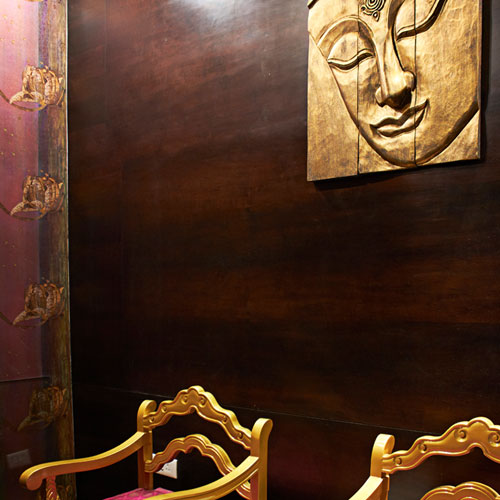
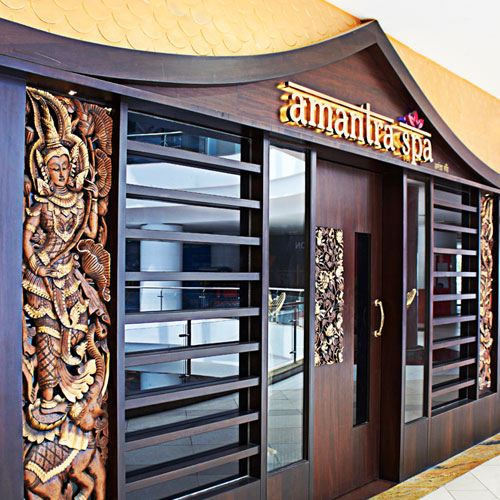
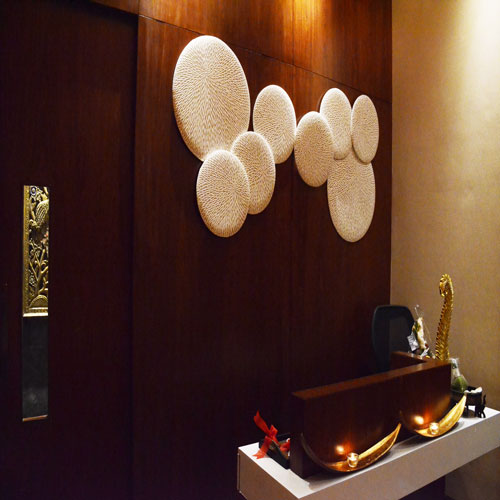
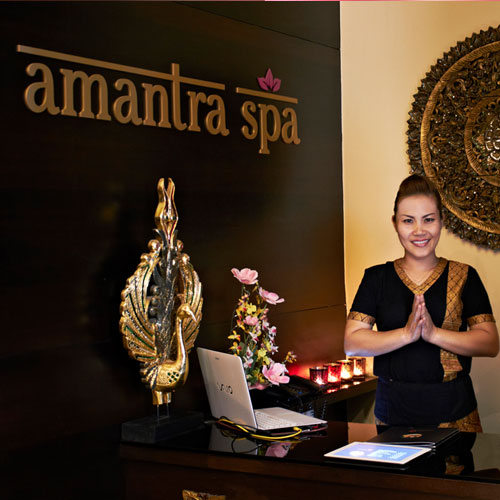
Enlightened by the experiences of spas in Thailand, in the year 2013 Amantra spa was created - a one of its kind concept - Our spas have all the necessary components, including the ambience and feel, to offer the most authentic and effective spa treatments. Our team comprises of a well-qualified team of therapists
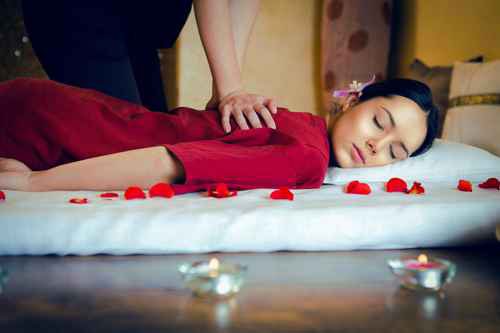
Amantra signature body massage (With premium oil, balm & steam) - 60 / 90 min
Rs 2600 / 3600
Aroma therapy (Using essential oils from flowers, seeds & leaves) - 60 / 90 min
Rs 2100 / 2900
Balinese massage 60 / 90 min
Rs 2100 / 3100
Swedish massage (This massage is exceptionally beneficially for relaxing the entire
body by rubbing the muscles with long gliding strokes) - 60 / 90 min
Rs 2100 / 2900
Deep tissue (This is used to target knots & release muscle tension) - 60 / 90 min
Rs 2300 / 3100
Thai massage (Massage without oil includes
yoga postures & Stretching) - 60 min
Rs 1900
All of your stress and knots will be kneaded out of your body and soul, and you will feel cleansed and renewed with top massage Al Barsha Dubai At RUSPA, you may enjoy affordable facials, waxing, and other spa treatments from skilled specialists, as well as true exotic massages like hot stone, deep tissue, Moroccan, and bamboo massage.
Thai + Oil massage (Thai massage followed by 1 hour oil massage) - 90 / 120 minEnjoy a relaxing day and get a rejuvenating session at the top massage center Dubai called Elis Spa. This Spa is the place you must go for a stress-relieving massage and to relax in a world-class environment with skilled masseuses.
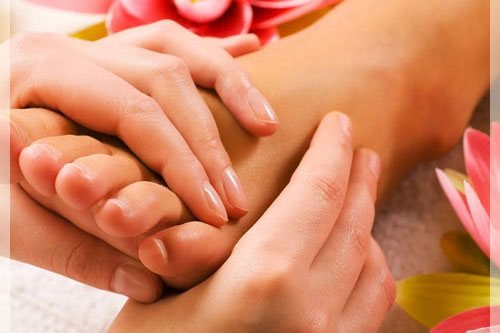
Our signature foot massage (Use specialized oil & balm to reduce the pain) - 30 / 60 min
Rs 1000 / 1500
Foot massage with scrub (This foot massage include foot scrub followed by oil massage)
60 min
Rs 1700
Herb bun foot massage 45 min
Rs 2100
Foot reflexology 45 min
Rs 1500
Head, Back, & Shoulder 45 min
Rs 1700
Foot massage,Head, Back, & Shoulder 60 min
Rs 2100
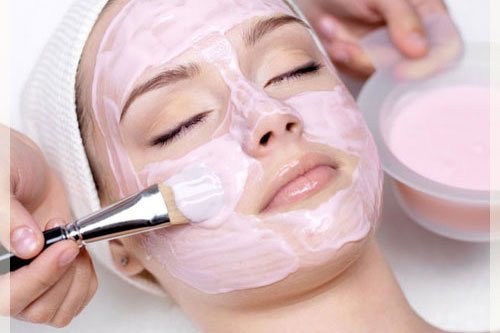
Whitening and brightening (for dull skin)
Rs 1900
Hydrating & nourishing
(for dry skin)
Rs 1900
Glowing & firming
(for glowing complextion)
Rs 1900
Acne defying
(for pimple prone skin)
Rs 1900
Anti aging
(for mature skin)
Rs 2100
Pearl whitening facial
(for pigment or toned skin)
Rs 2300
Wine facial
(Anti Aeging)
Rs 2300
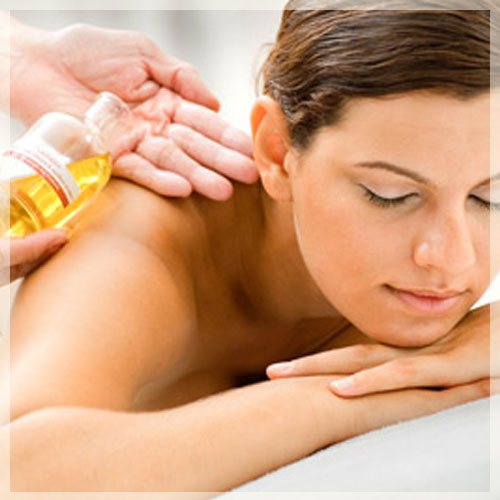
Body polishing- 45 min
Rs 1800
Seasonal Mango Body Scrub - 45 min
Rs 1999
Body polishing with massage
30 min body scrub followed by aroma body massage - 1 hr 30 min
Rs 3400
Rejuvenate yourself, spiritually, emotionally and physically and relax European massage center in Dubai. Kspa offers array of massages and treatments that cater to the wellness of mind and relaxation of the body like Bamboo massage, Swedish massage, Deep tissue, facial Massage and many more.
ROYAL AMANTRA PACKAGE
(Body Massage + Body Scrub + Facial) - 3hrs
Rs 4600
Head to toe package
(Head Massage + Body Scrub & Massage + Facial)- 3hrs 30 min
Rs 4900
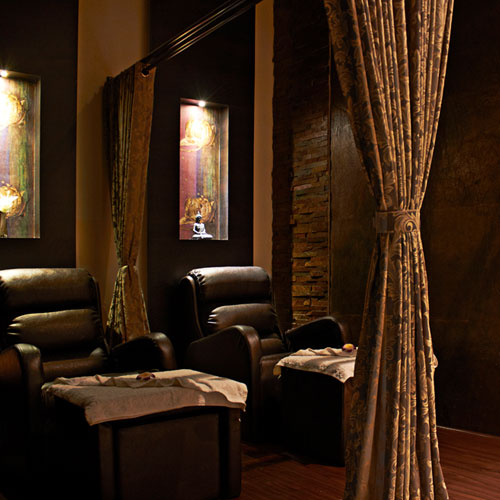
Enlightened by the experiences of spas in Thailand, in the year 2013 Amantra spa was created - a one of its kind concept - Our spas have all the necessary components,
including the ambience and feel, to offer the most authentic and effective spa treatments. Our team comprises of a well-qualified team of therapists
Amantra Spa, Unit No.20, 2nd Floor, Seasons Mall, Magarpatta City, Hadapsar, Pune - 411028.
95 455 72295,
.
Shop No.3, Wing No.2, Turning Point, Opp Rosary School, Viman Nagar, Pune-411014.
888 888 2146,
.
Shop No.20, Balewadi High Street, Next to McDonald's, Balewadi, Pune-411045.
8149793000,
9011993300
Amantra Spa, Shop no 2, GFN, Westend mall, Aundh, Pune 411007
8149805858,
9689683344
Amantra Spa, Shop no FF6A,1st Floor,Kumar Pacific mall,Shankar Sheth Road, Pune 411037
7744855855,
Amantra Spa, Unit no R4,Tower II,World trade center,Next to eon IT Park,Kharadi Pune 411014
,
8149806000